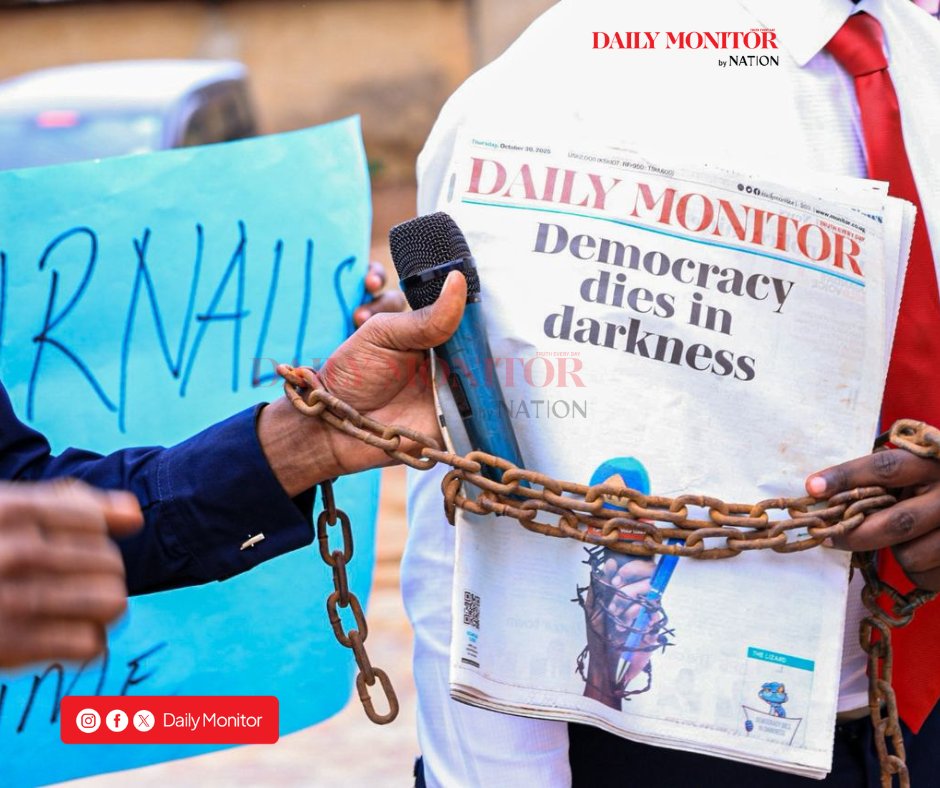

From advertising bans and office raids to parliamentary bans and targeted attacks, a timeline of NMG’s challenges underscores current media freedom crisis.
KAMPALA – The recent blockade of Nation Media Group (NMG) journalists from Uganda’s Parliament is not an isolated incident but the latest episode in a decades-long history of pressure and confrontation between the independent media house and the state, a review of the group’s timeline reveals.
The pattern of official pushback began almost from the inception of NMG’s flagship Ugandan publication. In 1992, The Monitor was founded as an independent newspaper. Just two years later, in 1994, the government imposed an advertising ban in an attempt to financially cripple the paper, a restriction only lifted in 1997 under international donor pressure.
The early 2000s saw an escalation, with the state directly targeting the media house’s operations and personnel. In 2002, President Yoweri Museveni publicly labeled The Monitor an “enemy newspaper,” a declaration that prompted a police raid and a 10-day closure. Journalists and editors faced legal battles; in 1997, Editor Charles Onyango-Obbo and journalist Andrew Mwenda were charged with publishing false news, a case later overturned by the Constitutional Court.
The acquisition of Monitor Publications Limited by the Nation Media Group in 2000 did not shield it from state interference. In 2005, journalist Andrew Mwenda was arrested mid-broadcast on KFM radio, which was also shut down and fined. The launch of NTV Uganda in 2006 was met with a significant setback when the station was taken off air for months, only resuming broadcasts in April 2007.
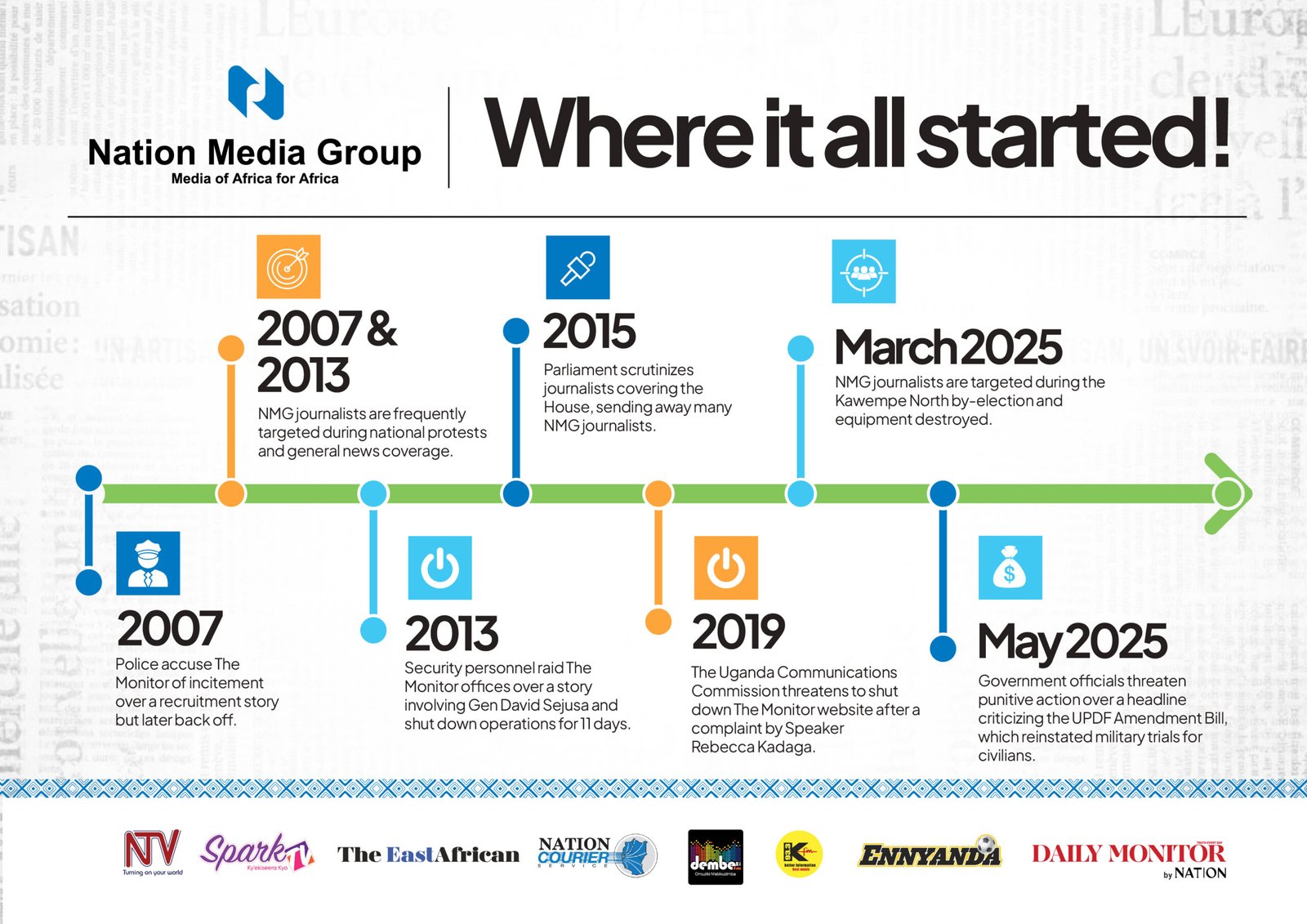
The timeline shows a consistent pattern of scrutiny and intimidation during key political moments. NMG journalists were frequently targeted during national protests and general news coverage in 2007 and 2013. In 2013, security personnel raided The Monitor offices over a story and shut down operations for 11 days.
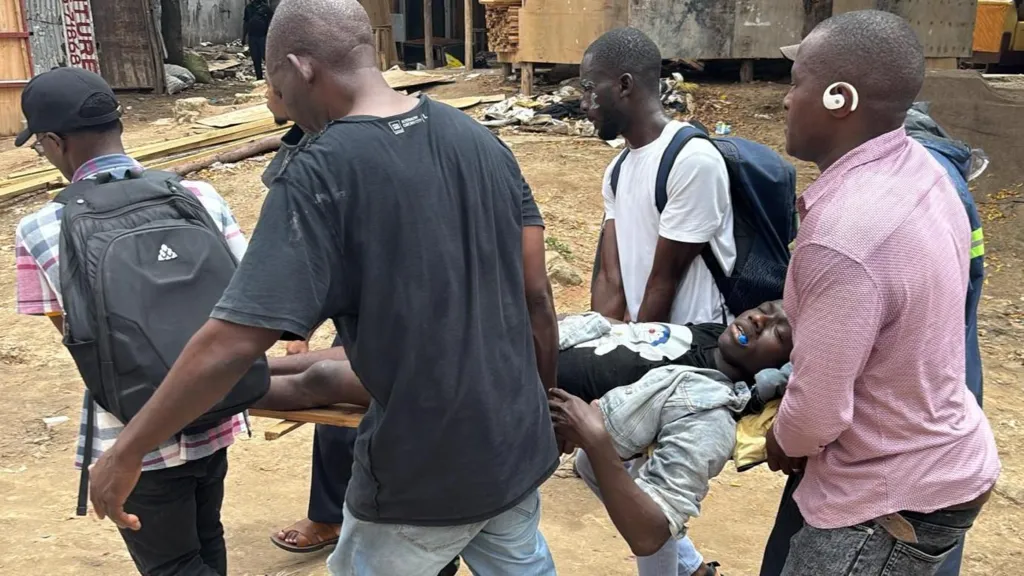
This pressure has continued into the present decade. In 2015, Parliament began scrutinizing journalists covering the House, sending away many from NMG. More recently, in March 2025, NMG journalists were targeted and their equipment destroyed during the Kawempe North by-election.
The threats have also extended to legal and regulatory avenues. In 2019, the Uganda Communications Commission threatened to shut down The Monitor website after a complaint by then-Speaker Rebecca Kadaga. As recently as May 2025, government officials threatened punitive action over a headline criticizing a military bill.
This historical context underscores the gravity of the current parliamentary ban. For over three decades, the Nation Media Group has navigated a landscape of advertising bans, office raids, broadcast suspensions, legal prosecutions, and physical attacks. The present standoff, therefore, is seen by press freedom advocates not as a new crisis, but as the continuation of a long-running struggle for independent journalism in Uganda.