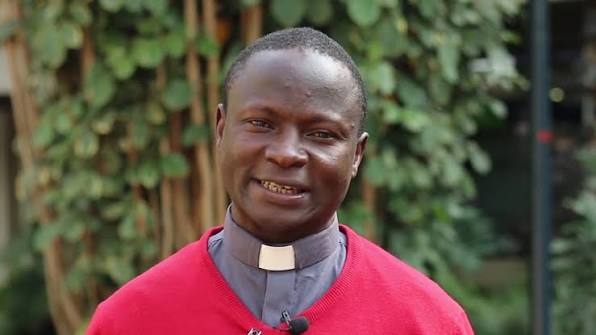

The abduction of Rev Fr Deusdedit Ssekabira has exposed a disturbing contradiction at the core of Uganda’s security apparatus and laid bare the erosion of the rule of law. On December 14, 2025, the Uganda Police Force publicly stated that it was merely noting social media reports alleging the priest’s abduction and that it was still verifying his whereabouts. Only hours later, the Uganda People’s Defence Forces issued a statement confirming that Rev Fr Ssekabira was in military custody.
This sequence was not accidental. It revealed a system in which civilians can be seized, concealed, and later acknowledged only when public pressure mounts. The police claimed ignorance while the military already had physical control of a civilian cleric. For human rights defenders and families of the disappeared, this contradiction confirmed what has long been alleged. Abductions occur first. Legality is constructed later.
The military confirmation raised immediate and serious questions. When was Rev Fr Ssekabira taken. Where was he held before the public acknowledgment. Why was the civilian police force unaware of the whereabouts of a citizen who was allegedly lawfully detained. None of these questions were answered.
Under Uganda’s Constitution and criminal procedure law, the military has no mandate to arrest or detain civilians except under narrowly defined circumstances related to active combat operations. Rev Fr Ssekabira is a civilian religious leader. His detention by the army therefore represents a clear breach of both constitutional safeguards and international human rights obligations. The police statement denying knowledge of his whereabouts further undermined recent military claims that all civilians arrested by the army are immediately handed over to police and that the UPDF operates no detention facilities of its own.
Those claims have now been rendered untenable. Only days earlier, military officials publicly insisted that the army does not detain civilians and that any such allegations were fabricated. That narrative collapsed the moment the UPDF acknowledged custody of a Catholic priest.
This case also aligns with a growing body of testimony from victims, lawyers, and regional witnesses. Recently, Kenyan citizens detained in Uganda confirmed they were held incommunicado at Kasenyi military barracks before diplomatic intervention secured their release. Ugandan opposition supporters and activists have repeatedly reported detention at Mbuya military headquarters, Kasenyi barracks, and a network of unofficial safe houses operated by military intelligence. These facilities exist outside judicial oversight, where detainees are routinely denied access to lawyers, family members, and medical care, and where torture allegations are consistent and widespread.
Rev Fr Ssekabira’s disappearance follows this exact pattern. He vanished. Authorities denied knowledge. Conflicting statements emerged. The military then confirmed custody without addressing the period of secrecy that preceded it.
This incident cannot be viewed in isolation. It is part of a broader climate of repression intensifying as Uganda approaches the 2026 general elections. Supporters of the National Unity Platform, civil society actors, journalists, and now religious leaders have increasingly found themselves targeted. Families of abducted persons frequently report that police stations deny any record of arrests, only for military authorities to later surface with claims of lawful detention. This fragmentation of responsibility obstructs legal remedies and shields perpetrators from accountability.
The violence underpinning this system is not theoretical. The November 2020 protests saw security forces kill more than fifty civilians after the arrest of opposition leader Robert Kyagulanyi Ssentamu. Investigations documented victims shot at close range. No meaningful accountability followed. Activists such as Sam Mugumya and Muzamiru Ssali remain missing. Others were later found dead bearing signs of torture. Each case reinforces the same message. Disappearance has become a method of governance.
The police denial followed by military confirmation in Rev Fr Ssekabira’s case is not a communication failure. It is a deliberate strategy. It creates confusion, delays legal intervention, and instills fear. When one arm of the state claims ignorance and another quietly holds a citizen, the rule of law ceases to function.
The abduction of Rev Fr Deusdedit Ssekabira now stands as a defining moment. A state that seizes a priest, conceals his whereabouts, and then contradicts itself about who is responsible has crossed a dangerous threshold. As Uganda moves toward 2026, the question is no longer whether abductions occur. They do. The question is how many more will disappear before accountability is demanded and whether silence will continue to be enforced as the price of survival.