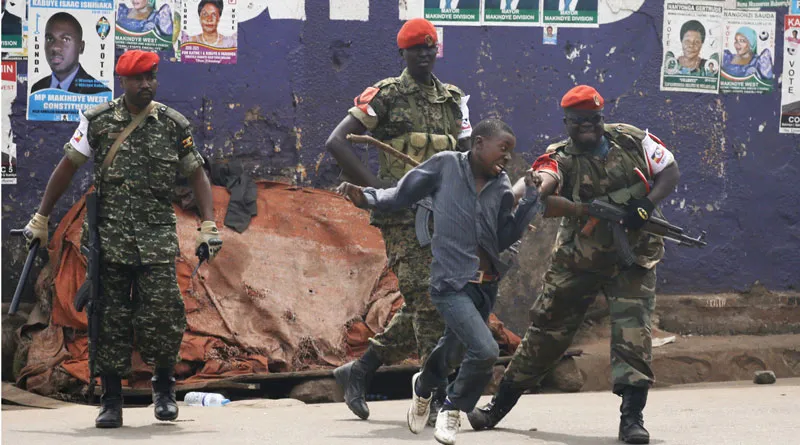

Uganda has been thrust into digital darkness as a nationwide internet shutdown coincides with escalating allegations of torture, abductions, and enforced disappearances allegedly carried out by security forces against opposition supporters ahead of the general elections.
The internet blackout, ordered by the Uganda Communications Commission (UCC), has suspended public internet access indefinitely, cutting off social media, messaging platforms, email services, and VPNs. The shutdown has effectively silenced the main channels through which citizens, journalists, and human rights defenders report abuses and share information in real time.
Abductions and Enforced Disappearances
Opposition parties, families, and civil society groups report a surge in abductions of opposition supporters, many allegedly carried out by armed men in military-style uniforms or unmarked vehicles. Victims are said to be picked up from their homes, workplaces, or streets and taken to unknown locations, with authorities often denying knowledge of their whereabouts.
Relatives of the missing say they have been unable to trace their loved ones through police stations or military barracks, raising fears of enforced disappearances. Lawyers claim access to detainees has been routinely denied, while some individuals who later reappear reportedly show signs of torture and severe physical abuse.
Digital Blackout and Alleged Abuse
Human rights advocates argue that the internet shutdown is not coincidental but strategically timed to prevent documentation and dissemination of these alleged abuses.
“When the internet is shut down, abductions happen in silence,” said one opposition figure. “People disappear, and there is no way to alert the nation or the world.”
With platforms like WhatsApp, Facebook, X, and Telegram inaccessible, witnesses are unable to upload videos or send alerts, and journalists are cut off from sources on the ground. Election monitors also face major challenges coordinating observation efforts.
Government Position
Authorities maintain that the shutdown is a security measure intended to curb misinformation, disinformation, and election-related violence. However, critics argue that blocking the internet while reports of torture and abductions emerge creates an environment of impunity for security forces.
The Uganda People’s Defence Forces (UPDF) and other security agencies have previously denied systematic abuses, insisting that arrests are lawful and aimed at preserving public order. Rights groups, however, say the scale and pattern of the reported abductions suggest a coordinated crackdown on political dissent.
Growing Fear and Isolation
The blackout has intensified fear among opposition supporters, many of whom say they now avoid public gatherings or political activity due to the risk of arrest or abduction. Communities report increased military patrols and checkpoints, further heightening tensions.
Economically, the shutdown has paralysed businesses that rely on digital platforms, while socially it has isolated millions of Ugandans from family, legal assistance, and emergency communication.
A Nation Cut Off
As Uganda approaches election day amid reports of torture, abductions, and enforced disappearances, the country remains offline and largely unheard. For critics, the internet shutdown is no longer just about controlling information—it is about controlling the narrative, suppressing dissent, and obscuring alleged human rights violations at a pivotal moment in the nation’s history.
For now, Uganda waits—offline, fearful, and cut off from the world.