
By Alexander Luyima | The Hoima Post
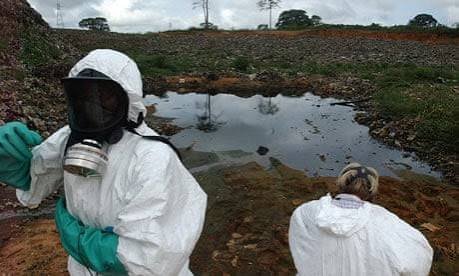
HOIMA, UGANDA: While the public’s attention remains fixed on land compensation packages and upcoming pipeline revenues, a highly classified and dangerous crisis is unfolding in the shadows of the Albertine oil boom. A months long investigation by The Hoima Post has uncovered an illicit network of logistics subcontractors, compromised local officials, and shell companies who are secretly dumping thousands of tonnes of untreated, toxic oil drilling waste directly into the fragile Bugoma Forest ecosystem and surrounding agricultural lands.
By bypassing expensive, legally mandated hazardous waste treatment facilities, these operators are saving millions of shillings at the direct expense of Bunyoro’s public health. Already, independent water testing commissioned by this publication confirms that heavy metals and chemical byproducts have begun breaching the local water table, turning community boreholes into silent vectors of disease.
The Midnight Convoys
National environmental laws strictly dictate that hazardous materials, including chemical heavy drilling muds, barite residues, and toxic industrial fluids generated during drilling operations, must be transported via specialized, manifest tracked vehicles to licensed thermal and chemical treatment plants in Luwero or Nakasongola.
However, The Hoima Post tracked an entirely different pipeline.
According to logistics manifests leaked by whistleblowers within a major transport subcontractor, thousands of gallons of industrial sludge are being offloaded into unmarked, ordinary vacuum tanker trucks. Under the cover of darkness, and away from the heavily guarded main security gates of the primary oil fields, these trucks bypass the official treatment routes.
Instead, they head down remote, unpaved tracks threading into the dense boundaries of the Bugoma Forest and adjacent private commercial farmlands in Kikuube and Hoima districts. There, drivers discharge the untreated chemical waste into hastily excavated, unlined earthen pits, which are immediately backfilled with topsoil to mask the dumping sites from public view.
The Shell Company Front and Local Payoffs
To shield multinational joint venture partners from legal liability, the operation relies on a complex web of local subcontractors. “The main logistics contractors sublet their waste management permits to small, freshly registered Ugandan shell companies,” a logistics manager speaking on the condition of anonymity revealed. “If a spill happens or a pit is discovered, the shell company takes the blame, files for bankruptcy, and vanishes. Meanwhile, the real operators keep their hands clean.”
This systemic deception is kept alive by widespread institutional failure. Our investigation reveals that several district environment officers and local council leaders have routinely ignored late night truck movements and community complaints regarding a pungent, chemical stench.
Sources indicate that these officials receive “monitoring fees,” disguised as local corporate social responsibility or consultation stipends, to look the other way. When community elders raised alarms over sudden patches of withered vegetation and dead livestock near the forest edge, a local council official reportedly told residents the deaths were caused by “a generic outbreak of ticks,” refusing to order a formal environmental assessment.

Poisoning the Water Table: The Hard Data
To separate rumor from reality, The Hoima Post collected water samples from three community boreholes and shallow streams located adjacent to recently backfilled commercial plots near the Bugoma boundary. The samples were analyzed by an independent laboratory.
The results are catastrophic. The water samples showed trace levels of barium, arsenic, and volatile hydrocarbons that far exceed the World Health Organization (WHO) maximum permissible limits for safe drinking water.
Barium and arsenic are heavy metal byproducts directly associated with deep well oil exploration. Their presence in shallow community water tables is definitive proof of industrial contamination. Over prolonged periods, exposure to these heavy metals causes irreversible kidney damage, chronic skin lesions, and significantly elevates the risk of internal cancers.
The Silent Health Crisis
The environmental fallout is already registering at local rural health clinics in Kikuube and Hoima. Medical logs reviewed by this reporter show an unprecedented, undocumented spike in severe, chemical style skin rashes, acute respiratory distress among children, and sudden miscarriages in livestock over the last 18 months.
Despite the data, a chilling wall of silence remains. Two medical staff members at a local health centre revealed they were explicitly instructed by district health administrators to classify these unusual symptoms as generic bacterial infections or standard tropical eczema. “We are told not to cause unnecessary panic that could disrupt local oil logistics,” one nurse stated flatly. “But we know what we are seeing. The water is killing them.”
The Veil of Security
Exposing this network remains incredibly dangerous. The entire Albertine Graben is under tight military and specialized police surveillance. Journalists, environmental activists, and independent researchers are routinely stopped, questioned, or turned back at checkpoints under the guise of “protecting vital national security assets.”
This security blanket, intended to protect Uganda’s economic future, is instead being weaponized to conceal an ecological crime. By treating environmental oversight as a threat to national security, compromised actors have been given total immunity to poison the soil and water that millions of citizens rely on for survival.
As the drilling accelerates, the clock is ticking for Bunyoro. The National Environment Management Authority (NEMA) and the Petroleum Authority of Uganda (PAU) can no longer hide behind official denials or point to pristine paperwork. The toxic trail leads directly into the heart of the forest, and the evidence is already flowing out of the community taps.