
By Alexander Luyima | The Hoima Post
Where is Sam Mugumya? And why does it seem easier to document human rights violations than to stop them?
These are questions Uganda and the international human rights community can no longer afford to ignore.
For years, allegations of abductions, arbitrary arrests, torture and enforced disappearances have haunted Uganda’s political landscape. Families search for missing relatives. Lawyers turn to the courts. Human rights organisations publish reports. Governments face condemnation.
Then the headlines fade.
The reports remain. The families remain in anguish. The victims remain missing. And life moves on for everyone except those waiting for answers.
What, then, is the practical value of documenting human rights violations if those responsible are never held accountable and those affected are never rescued?
Sam Mugumya: A Question That Will Not Go Away
Sam Mugumya, a longtime associate of opposition leader Dr Kizza Besigye, was reportedly taken by armed men in Mbarara on August 26, 2025. His whereabouts subsequently became the subject of court proceedings seeking his production before the High Court.
In September 2025, military authorities reportedly maintained that searches of relevant defence detention facilities and records had found no entry showing that Mugumya was being held.
Then came a disturbing development.
In September 2026, former military intelligence officer Lt Herbert Matanda Mabonga came forward with videos and allegations concerning secret detention facilities. He claimed to have information relevant to the fate of missing individuals, including Mugumya. The military rejected his allegations, and the footage requires independent verification.
On October 2, 2026, a statement attributed to Uganda’s army chief, General Muhoozi Kainerugaba, reportedly claimed that Mugumya was in his custody and threatened to execute him.
If accurately reported, this raises an extraordinary question: How can a person be publicly claimed to be in custody when military authorities previously denied holding him?
That apparent contradiction demands an immediate, credible explanation.
If Mugumya is alive and detained, he must be produced before the appropriate court and afforded the protection of the law. If he is not in state custody, authorities must help establish his whereabouts and investigate the circumstances of his disappearance.
There should be no ambiguity about a human being’s fate.
NUP Supporters Are Not Statistics
Mugumya’s case is not isolated from the wider concerns surrounding political freedoms in Uganda.
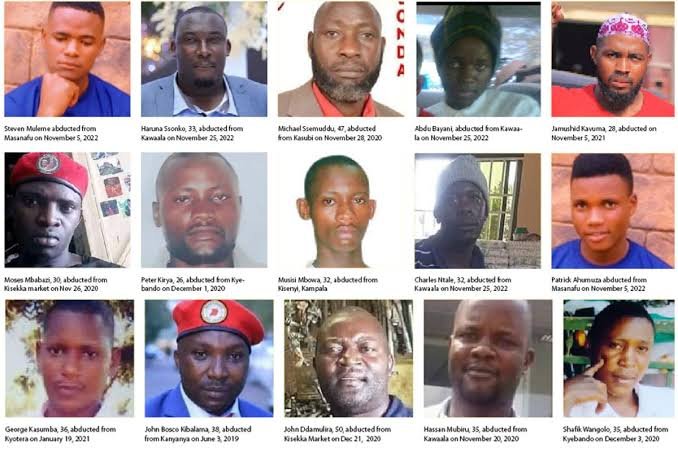
National Unity Platform supporters and other government critics have faced allegations of arbitrary arrest, unlawful detention, torture and enforced disappearance. Human rights organisations have documented serious concerns, while families continue to seek information about missing relatives and access to justice.
Behind every case is a human being. Behind every missing person is a family trapped between hope and despair.
These people are not statistics to be counted in annual reports. They are citizens whose rights deserve protection, regardless of political affiliation.
A country cannot credibly claim to uphold the rule of law if people can allegedly be taken by armed men, disappear from public view and leave their families searching for answers for months or years.
Nor should anyone have to wait for a loved one to emerge injured or dead before their suffering receives serious attention.
Justice delayed is painful. Justice documented but never pursued is an even deeper betrayal of public trust.
To Human Rights Organisations: What Happens After the Reports?
My questions are directed to the Uganda Human Rights Commission, Amnesty International, Human Rights Watch, the United Nations human rights mechanisms and other organisations committed to defending human dignity.
You document abuses. You publish reports. You issue statements. You call for investigations.
But what happens next?
How many missing people have been located through sustained follow-up? How many families have received credible answers? What mechanisms are activated when domestic authorities fail to investigate? What protection is available to witnesses and whistleblowers who risk their safety to expose alleged abuses?
And when a case remains unresolved, who keeps pressing until there is a meaningful outcome?
I recognise that these organisations have different mandates and powers. They cannot all arrest suspects, compel governments to comply or personally secure the release of detainees. But their influence, investigative capacity, legal advocacy and international networks should be mobilised to pursue practical results.
The public deserves to know not only what violations have been documented, but also what action has followed, what obstacles remain and what further steps are possible.
Human rights work must not end when a report is published. Documentation should be a starting point for action, not a substitute for it.
The State Must Answer
The primary responsibility for protecting citizens, investigating alleged crimes and ensuring accountability rests with the state and its institutions.
Ugandan authorities must establish the whereabouts of missing people, investigate credible allegations of unlawful detention and torture, preserve evidence and ensure that anyone responsible for proven offences faces due process.
The courts must be able to exercise their authority without obstruction or unnecessary delay. Parliament must follow through on its oversight responsibilities. Investigators must examine evidence impartially, regardless of who is implicated.
And where public statements appear to contradict sworn court declarations, the public deserves a clear explanation.
These demands are not partisan. They apply equally to supporters of the National Unity Platform, the National Resistance Movement and citizens who belong to no political party.
Constitutional rights are not privileges granted by those in power. They are protections that limit the power of the state.
We Must Act Before Another Family Is Left Mourning
One of the most troubling patterns in public life is how quickly outrage can fade.
When a person disappears, there are questions. When evidence emerges, there are demands for answers. When someone dies, there are tributes, condolences and expressions of sadness.
Then the world moves on.
But the family does not move on so easily. The unanswered questions remain. The loss remains. The fear that another person could suffer the same fate remains.
Why must families carry this burden alone?
Why should witnesses fear retaliation for coming forward?
Why should the whereabouts of a missing citizen become a political controversy instead of an urgent matter requiring investigation?
And why should human rights institutions have to document the same kinds of allegations repeatedly without the public seeing meaningful progress towards accountability?
We must stop treating these cases as temporary headlines. Every credible allegation deserves proper examination, every missing person deserves urgent attention, and every victim deserves access to justice.
I Will Keep Asking
I do not claim to be the only person asking where Sam Mugumya is. Lawyers, relatives, journalists, opposition leaders and human rights advocates have also raised concerns.
But the question must not disappear simply because asking it is uncomfortable.
If people are afraid to speak, that fear itself deserves attention. No one should be threatened for demanding answers, and witnesses who come forward with credible evidence deserve appropriate protection.
Lt Herbert Matanda Mabonga’s allegations must be independently examined. Sam Mugumya’s whereabouts must be established. Other families searching for missing relatives must not be forgotten. Anyone responsible for proven wrongdoing must be held accountable through lawful processes.
To the Uganda Human Rights Commission, Amnesty International, Human Rights Watch and the international human rights community: what concrete action can you take to help turn documented violations into protection, answers and justice?
To the Ugandan authorities: where is Sam Mugumya?
And to all of us: how many more families must endure this uncertainty before accountability becomes more than a promise?
We cannot keep waiting for victims to die before we recognise the urgency of their suffering.
We cannot keep confusing reports with results, statements with solutions or condemnation with justice.
The true test of a human rights system is not how eloquently it describes suffering, but how effectively it helps end it.
WHERE IS SAM MUGUMYA?
And when power is abused, what can actually stop it?
Alexander Luyima | The Hoima Post