
By Alexander Luyima
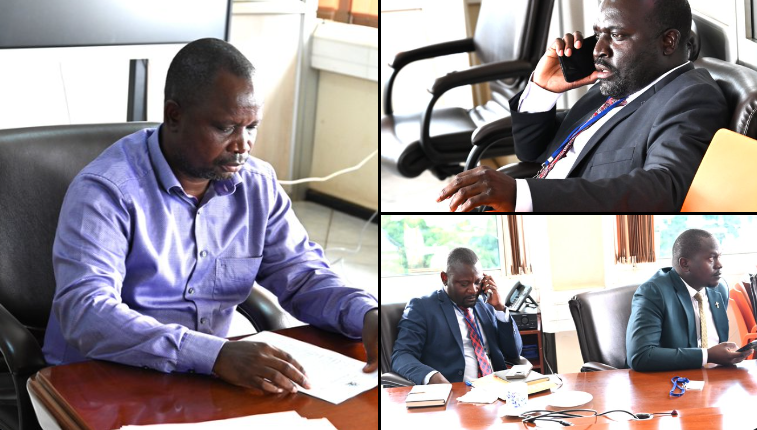
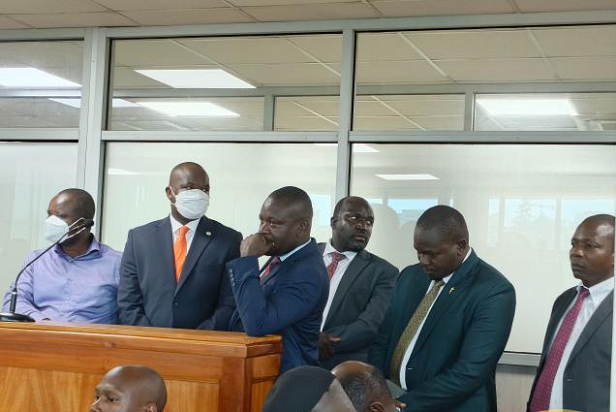
KAMPALA, Uganda: As the seven senior parliamentary officials sit in Luzira Prison awaiting their next court appearance on July 7, newly emerging details from the charge sheet and investigative sources paint a damning picture of how public funds were allegedly siphoned through a coordinated scheme involving multiple departments.
The case, which has sent shockwaves through Uganda’s political establishment, centres on allegations that senior staff exploited their positions to divert funds meant for parliamentary activities, including Corporate Social Responsibility (CSR) projects, staff welfare, and administrative expenses, into personal accounts and shell entities.
The Anatomy of the Alleged Scheme
According to prosecution documents, the alleged embezzlement operated through a multi layered system.
1. CSR Fund Diversion
The largest chunk of the alleged loss, Shs27.201 billion, relates to funds Parliament had set aside for donations and community projects. Prosecutors allege that instead of implementing these activities, the accused simply pocketed the money, falsifying reports to show the projects had been completed.
2. SACCO Mismanagement
The involvement of Methods Murebe, the CEO of the Uganda Parliamentary SACCO, points to alleged irregularities in how the staff savings cooperative was managed. Sources close to the investigation suggest that SACCO funds may have been commingled with parliamentary administrative funds, creating a smoke screen for irregular transactions.
3. Ghost Activities and Forged Documentation
Investigators reportedly traced payments to suppliers who either did not exist or had no record of delivering goods or services to Parliament. The sheer volume of transactions, spanning over three years, suggests a sophisticated operation, not isolated incidents of fraud.
Expert Analysis: A Test Case for Uganda’s Anti Corruption Framework
Legal experts watching the case closely believe its outcome could define Uganda’s anti corruption trajectory for years to come.
«”This is not just another corruption case. The accused are senior administrative officers who held the keys to Parliament’s financial vaults. If the prosecution can secure convictions, it will be the single most significant victory against institutional corruption in Uganda’s history. If the case collapses, it will embolden those who believe they are untouchable.”»
Prof. Edward Kanyike, Constitutional Law Expert, Makerere University
The prosecution faces several hurdles, however.
High Burden of Proof
The State must prove beyond reasonable doubt that each accused knowingly and intentionally participated in the scheme. Direct evidence of intent is notoriously difficult to establish in financial crimes.
Complex Money Trails
The money laundering charges involve tracing Shs10.893 billion through multiple accounts and transactions. Forensic accountants from the Inspectorate of Government have been working for months to unravel the financial web.
Potential for Delays
The case must now be committed to the High Court for trial on the money laundering charges, a process that could take months. Defence lawyers are expected to file numerous applications, potentially dragging proceedings into 2027 or beyond.
Political Implications: Whispers of Broader Accountability
While the seven accused are administrative staff, political observers note that their alleged actions occurred under the watch of senior political leadership, including former Speaker Anita Among. Though Among has not been charged, the ongoing searches at her residences and former office suggest investigators are casting a wider net.
«”The public is watching not just the trial of these officials, but whether the investigation will reach the political leadership that oversaw them. If the case stops at the administrative level, many will see it as selective justice. The real test is whether this is the beginning of a cleansing exercise or a limited strike to appease public anger.”»
Ms. Grace Nambatya, Political Analyst and Governance Consultant
The Accused: Profiles and Allegations
Name| Position| Alleged Amount (UGX)| Primary Charge
Daniel Adilo| Director, Human Resources| 14.609 billion| Embezzlement
Chris Ariko Obore| Director, Communications & Public Affairs| 5.253 billion| Embezzlement
Vincent Otebata| Capacity Development Officer| 5.253 billion| Embezzlement
Leonard Okema| Executive Secretary, Speaker’s Office| 3.489 billion| Embezzlement
Rajab Kaaya Ssemalulu| Principal Research Officer| 2.170 billion| Embezzlement
Emmanuel Emuron Okwi| Principal Protocol Officer| 1.105 billion| Embezzlement
Stella Itute| Office Supervisor, Sergeant at Arms| 75 million| Embezzlement
Joint Charge (All except Murebe)| Causing Financial Loss| 27.201 billion| Causing Financial Loss
Murebe + Six Others| Money Laundering| 10.893 billion| Money Laundering
Note: Methods Murebe (SACCO CEO) faces money laundering charges but not the embezzlement counts related to parliamentary funds.
Defence Response: A Statement of Innocence
Through their lawyer, Ibrahim Kikaabe, the accused have strongly denied all allegations. In a brief statement to reporters outside court, Kikaabe maintained that his clients were being made scapegoats for systemic failures in Parliament’s financial management systems.
«”My clients are innocent until proven guilty. These are hardworking public servants who have served Parliament with distinction. The irregularities identified by the Inspectorate are administrative, not criminal. We are confident that the truth will emerge in court, and my clients will be fully exonerated.”»
Ibrahim Kikaabe, Lead Defence Counsel
Kikaabe also indicated that bail applications would be filed at the next hearing, citing the accused’s long standing ties to the community and their willingness to cooperate with investigations.
What Happens Next?
The case timeline is now as follows.
1. July 7, 2026: The accused return to the Anti Corruption Court for mention. Bail applications are expected.
2. Committal to High Court: The prosecution will formally apply to have the money laundering charges transferred to the High Court. This could take 1 to 2 months.
3. Pre Trial Motions: Defence lawyers are expected to challenge the admissibility of certain evidence, potentially seeking to have some charges dropped.
4. Trial: A full trial in the High Court could begin as early as late 2026 or early 2027, depending on the pace of pre trial proceedings.
Public Reaction: A Mix of Hope and Skepticism
Public sentiment across Uganda reflects a familiar tension, hope that justice will finally be served, tempered by skepticism born from decades of unfulfilled promises to tackle graft.
Social media has been flooded with reactions.
* “Finally! They thought they were above the law. Let them rot in Luzira.”
* “Arresting the small fish. The real thieves are still sitting in Parliament.”
* “Don’t celebrate yet. We’ve seen this before. They will find a way to escape.”
* “If Obore is guilty, the entire communications budget needs to be audited. This is just the tip of the iceberg.”
A Defining Moment
Regardless of the outcome, the trial of these seven officials represents a defining moment for Uganda’s anti corruption crusade. It tests not only the effectiveness of investigative agencies but also the independence of the judiciary and the political will to hold powerful figures accountable.
For now, the accused remain in custody, their fate in the hands of the courts and a nation watching closely, hoping that this time, justice will not be delayed or denied.
This article will be updated as new developments emerge. The accused are presumed innocent until proven guilty in a court of law.