
By Alexander Luyima | The Hoima Post
The recent arrest and arraignment of activist Praise Aloikin Opoloje, popularly known as Faith Aloukin, has raised serious questions about transparency, due process and the consistent application of Uganda’s laws.
Her case presents a striking difference between what the Uganda Police publicly said about the circumstances surrounding her arrest and the criminal charge that was eventually presented before Buganda Road Chief Magistrate’s Court.
The Bait and Switch: Uganda Police Statements Versus the Court Charge
Following Aloikin’s arrest, Uganda Police publicly linked her case to her activities on digital platforms. Police spokespersons spoke about alleged misuse of digital platforms, while Kampala Metropolitan Police later indicated that she would face an allegation relating to broadcasting without a licence.
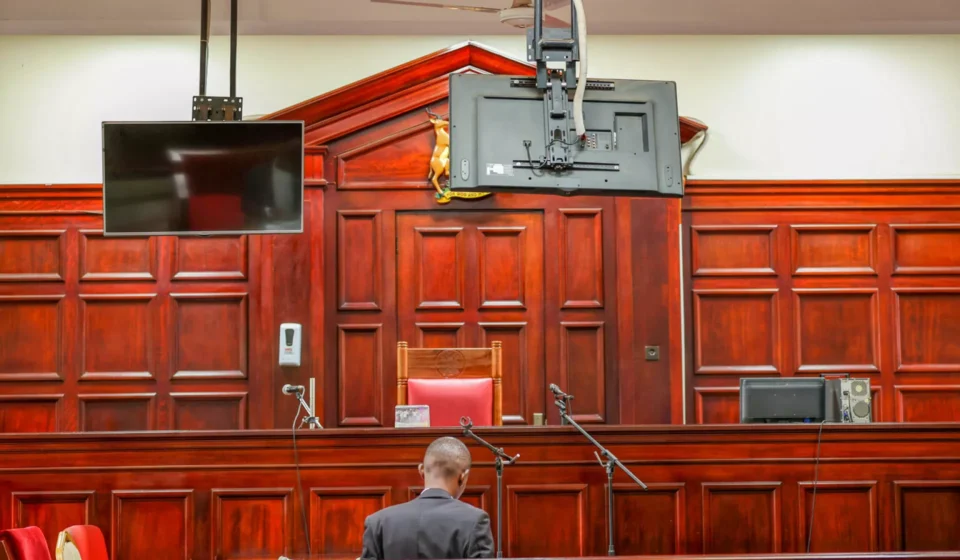
However, when Aloikin appeared before Buganda Road Court, the charge reported by several Ugandan media outlets was different.
According to reports identifying the court charge sheet as CRB 1095/2026 and Buganda Road Court Charge No. 1440/2026, Aloikin was charged under Regulation 29 of the Regulation of Interception of Communications Regulations, 2024.
The prosecution alleges that she unlawfully used an MTN SIM card registered in the name of Martha Nalapa Tasima for the purpose of executing an illegal activity. Aloikin denied the charge.
This difference deserves public scrutiny.
A statement made by a Uganda Police spokesperson is not itself a criminal charge before court. The formal charge is what the prosecution presents through the established criminal justice process.
However, when the public explanation surrounding an arrest differs substantially from the allegation eventually placed before court, Ugandans are entitled to ask a straightforward question:
Why was the public told one thing about the case while the court charge reflected something different?
That question deserves a clear answer.
The SIM Card Charge Is Not Simply a Technicality
There is also a need to be precise about the charge.
It would be inaccurate to describe the allegation merely as using a SIM card that was registered in another person’s name.
The reported charge alleges that the SIM card was used for the purpose of executing an illegal activity. That makes the allegation a criminal matter that must be proved according to law.
Aloikin has pleaded not guilty and remains presumed innocent unless and until a competent court determines otherwise.
Therefore, the important issue is not whether the charge exists. It does.
The important issue is whether the prosecution can establish every element of the offence alleged against her.
This distinction matters because technical provisions of the law can have serious consequences when they result in the arrest, detention or prosecution of a citizen.
The Constitutional Question
The Aloikin case also sits within Uganda’s continuing debate over freedom of expression and the use of criminal law in relation to online activity.
Article 29 of the Constitution protects freedom of expression, while Article 21 provides that all persons are equal before and under the law and are entitled to equal protection of the law.
These constitutional protections do not mean that everything published online is automatically protected from investigation or prosecution.
They do, however, require the State to exercise its powers within the Constitution and the law.
Uganda’s courts have previously intervened where criminal provisions affecting expression were found to violate constitutional protections. The Constitutional Court struck down the offensive communication provision of the Computer Misuse Act, and subsequent constitutional litigation has continued to examine the limits of criminal restrictions on digital expression.
The principle is therefore straightforward.
Whenever the State restricts a person’s liberty because of conduct connected to speech, communication or digital activity, the legal basis for that action should be clear, specific and capable of surviving constitutional scrutiny.
The Question of Selective Enforcement
The deeper concern for many Ugandans is not simply what the law says.
It is how consistently that law is enforced.
Article 21 of the Constitution provides that all persons are equal before and under the law and are entitled to equal protection of the law.
That principle applies to ordinary citizens, activists, politicians, government officials and members of the armed forces alike.
This brings the discussion to Gen. Muhoozi Kainerugaba, Uganda’s Chief of Defence Forces.
Article 208 of the Constitution provides that the Uganda People’s Defence Forces shall be non partisan and subordinate to civilian authority. The UPDF Act and related military rules also regulate the political conduct of serving members of the armed forces.
At the same time, Gen. Muhoozi has publicly been associated with the Patriotic League of Uganda, which identifies him as its chairman, while his political ambitions and activities have been widely reported.
These circumstances raise a legitimate constitutional question.
How should Uganda’s non partisan military requirement operate when a serving senior military officer is publicly associated with political mobilisation and political activity?
That question should be answered through the Constitution, legislation and established legal mechanisms.
It should not depend on the political status of the person involved.
One Law, One Standard
The issue is not whether Gen. Muhoozi or Faith Aloukin should be declared guilty of anything.
Neither has the court made such a determination in the context discussed here.
The issue is whether the same legal standards are applied consistently.
If an activist can face criminal proceedings over conduct involving a SIM card and digital activity, citizens are entitled to ask how the authorities assess comparable questions involving powerful public figures.
That is not a demand for preferential treatment for activists.
It is a demand for equal treatment under the law.
Uganda Police and Public Accountability
There is another important distinction.
There is no general legal rule giving Uganda Police permission to deliberately lie to the public during an investigation.
Nor is a police spokesperson’s public statement the same thing as a judicial finding.
Police have a responsibility to investigate suspected offences and communicate with the public. When information provided by police about the nature of an arrest differs substantially from the charge subsequently brought before court, public confidence requires transparency about what happened between those two stages.
The proper question is therefore not whether the police are allowed to change a charge.
Investigations can develop, evidence can change and prosecutors can determine that a different charge is appropriate.
The proper question is whether the authorities communicate honestly and accurately with citizens while exercising their considerable powers.
The Courts Must Remain the Final Authority
Aloikin’s case remains before the courts.
The prosecution must prove its allegations, and Aloikin remains entitled to the presumption of innocence.
The court, rather than the Uganda Police, political actors or social media commentators, will ultimately determine whether the prosecution has established the offence charged.
That is precisely why due process matters.
A citizen should not be treated as guilty because of a police statement, a political accusation or public speculation.
Equally, law enforcement agencies should not be condemned as having established guilt simply because a controversial charge has been brought.
The evidence must be tested in court.
The Real Test
The Aloikin case is therefore about more than one activist and more than one SIM card.
It raises fundamental questions about how Uganda’s criminal justice system communicates with the public, how criminal laws are selected and applied, how constitutional rights are protected and whether the principle of equality before the law is being applied consistently.
Ugandans are entitled to ask why the Uganda Police publicly associated Aloikin’s arrest with one set of allegations while the charge eventually presented before court concerned another specific offence.
They are entitled to ask whether similar legal standards are applied to citizens regardless of political influence or public position.
And they are entitled to expect the Constitution to mean what it says.
A constitutional democracy cannot operate on one standard for the powerful and another for ordinary citizens.
The law must speak for itself.
And most importantly, the law must speak equally.