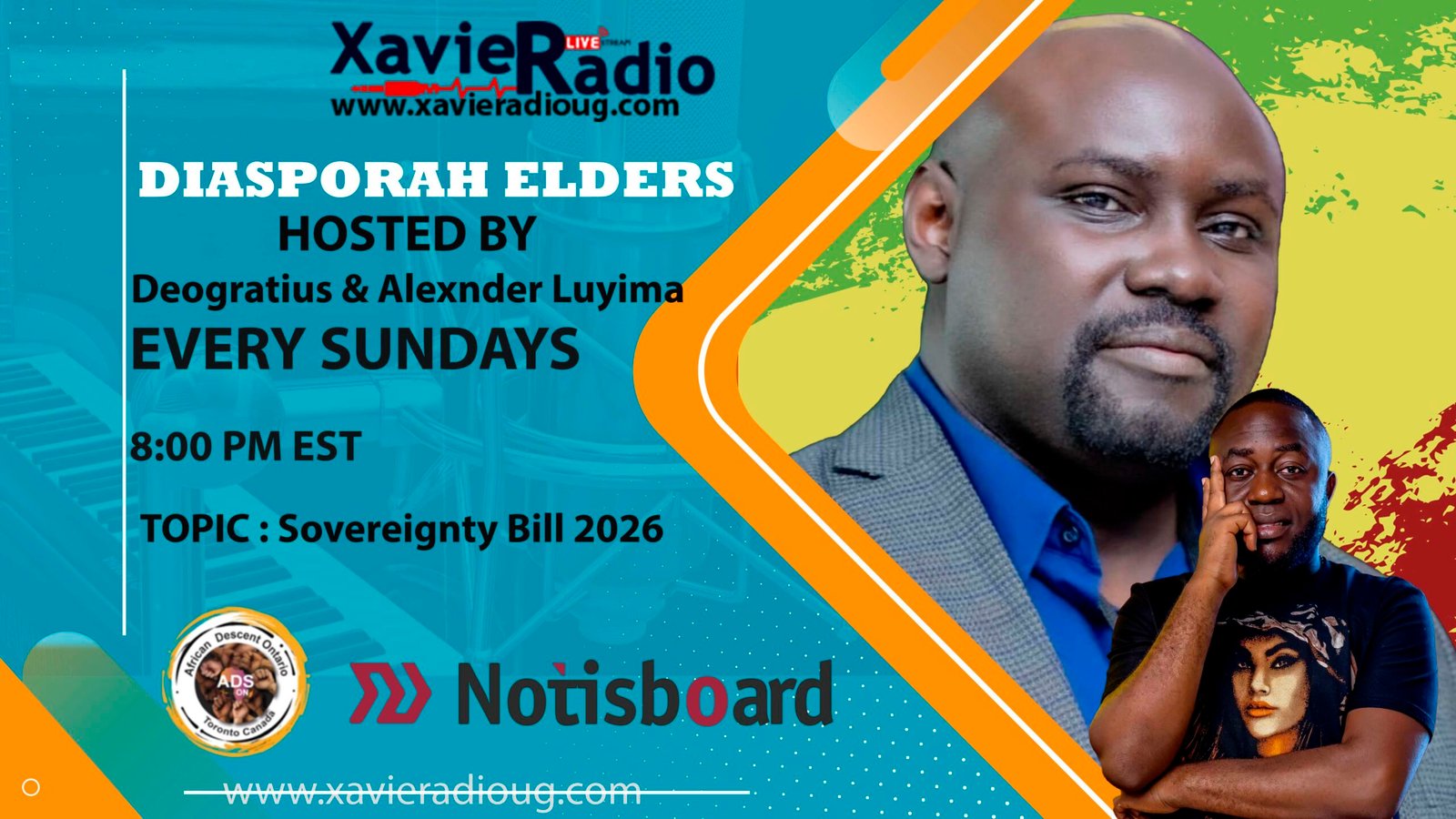
Uganda Diaspora Voices Tackle Uganda’s Sovereignty Bill 2026 on XaveRadio Tonight 8pm

In a powerful and timely discussion on the show “Diasporah Elders,” Male Deogratius and Alexander Luyima of African Descent Ontario convened on XaveRadio via www.xavieradioug.com to unpack one of the most controversial legislative proposals in Uganda today — the Protection of Sovereignty Bill, 2026. Their conversation shines a spotlight on the far-reaching implications of the bill, particularly for Ugandans living abroad.
Understanding the Sovereignty Bill 2026
The Protection of Sovereignty Bill, 2026 was officially introduced in Uganda’s Parliament in April 2026 as part of a broader effort by the government to regulate foreign influence in national affairs.
At its core, the bill seeks to:
- Establish strict oversight of individuals and organizations linked to foreign entities
- Require registration of “agents of foreigners”
- Control foreign funding and partnerships within Uganda
Under the proposed law, individuals accused of engaging in unauthorized foreign-backed activities could face up to 20 years in prison and heavy fines.
Even more controversial are provisions that:
- Criminalize influencing public opinion against government policy
- Introduce vague offenses like “economic sabotage”
- Require Cabinet approval for participation in policy-related activities
These clauses have raised serious concerns about freedom of expression, civic engagement, and democratic participation.
Key Concerns Raised on “Diasporah Elders”
During the XaveRadio broadcast of “Diasporah Elders,” Male Deogratius and Alexander Luyima described the bill as a turning point for Uganda’s political and social landscape. Their discussion emphasized three major issues:
1. Shrinking Civic Space
The speakers argued that the bill could silence journalists, activists, and opposition voices by criminalizing dissent and independent policy engagement.
2. Impact on Media and Public Discourse
With penalties tied to publishing information deemed harmful to the economy or government, the bill could create a climate of fear in journalism and digital media, limiting open dialogue.
3. Diaspora Disconnection
One of the most alarming aspects discussed was how the bill defines “foreigners” — a category that may include Ugandans living abroad.
The Impact on the Ugandan Diaspora
For the Ugandan diaspora, particularly communities in Canada, the United States, and Europe, the Sovereignty Bill could have profound consequences:
• Criminalization of Engagement
Diaspora Ugandans who support local initiatives, fundraise, or participate in political discussions could be classified as “agents of foreigners,” exposing them to legal risks.
• Restrictions on Investment and Development
Remittances and diaspora-led investments — a key pillar of Uganda’s economy — may face bureaucratic barriers, approvals, or scrutiny, discouraging economic participation.
• Silencing of Diaspora Advocacy
Many Ugandans abroad play an active role in advocating for democracy and human rights. The bill could deter this engagement by labeling it as interference.
• Identity and Citizenship Tensions
By treating diaspora citizens as “foreign-linked actors,” the bill raises deeper questions about belonging, national identity, and the rights of Ugandans abroad.
Broader Economic and Political Implications
Experts warn that the bill could:
- Undermine investor confidence
- Disrupt international partnerships
- Slow economic growth due to restricted information flow and foreign engagement
Additionally, critics argue that such sweeping powers could centralize control within the government, weakening democratic institutions.
A Defining Moment for Uganda
The “Diasporah Elders” discussion on XaveRadio concluded with a call for greater awareness, dialogue, and advocacy. Male Deogratius and Alexander Luyima urged Ugandans — both at home and in the diaspora — to closely follow the bill’s progression and engage in constructive debate.
As Uganda’s Parliament reviews the bill, its final shape could redefine:
- Uganda’s relationship with the global community
- The role of its diaspora
- The future of civic freedoms in the country