
By Alexander Luyima
Journalist | Socio Economic Analyst
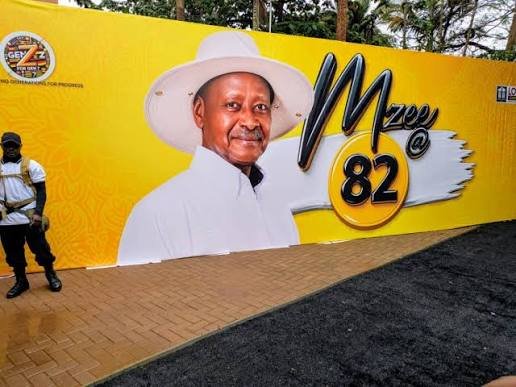
Uganda has been marking President Yoweri Museveni’s 82nd birthday with celebrations and political gatherings.
But while the celebrations continue, another Uganda is asking a painful question:
What is happening to the millions of Ugandans who cannot afford their next meal?
In Karamoja, hunger has already claimed lives. In July 2026, reports indicated that at least 19 people had died from starvation, prompting the government to launch emergency food distribution. The government announced Shs45 billion for the intervention, targeting hundreds of thousands of households across the region.
But this is where the uncomfortable questions begin.
How much of the money allocated for hungry Ugandans actually reaches hungry Ugandans?
And when the food arrives, how much reaches the household it was intended for?
These are legitimate accountability questions.
An August 9 Office of the Prime Minister report showed that 5.75 million kilograms of the contracted 9.42 million kilograms of relief food had been delivered, representing about 61 percent. Distribution had reached 141,734 households across 220 parishes, although delivery varied considerably between districts.
Uganda also has a documented history of controversies involving resources intended for vulnerable communities in Karamoja.
In April 2026, the Anti Corruption Division of the High Court convicted former State Minister for Karamoja Affairs Agnes Nandutu over the unlawful possession of 2,000 government iron sheets intended for vulnerable communities. She was subsequently sentenced to four years in prison and barred from holding public office for 10 years.
That history makes transparency even more important.
When government announces billions of shillings for emergency relief, Ugandans have a right to demand accountability from the allocation of the money to the final kilogram of food delivered.
And this is where the contrast with lavish political celebrations becomes difficult for many ordinary Ugandans to ignore.
This is not about denying President Museveni the right to celebrate his birthday.
It is about asking whether national priorities reflect the reality facing citizens who are struggling to put food on the table.
The government itself has acknowledged that emergency relief cannot be the permanent solution. Members of Parliament have called for greater investment in irrigation, disaster preparedness and sustainable agricultural production rather than repeated dependence on emergency food aid.
President Museveni has also recently outlined a longer term food security strategy for Karamoja aimed at reducing dependence on emergency relief and moving households toward sustainable and commercial agriculture.
That is the bigger issue.
Uganda should not wait for people to die before food trucks are dispatched.
Ugandans should not have to depend on emergency relief year after year.
Every shilling allocated to people facing hunger should be traceable, accountable and visible in the hands of those it was intended to help.
A country can celebrate its leaders.
But it must never become comfortable with hunger.
The real question is simple:
When billions are announced for hungry Ugandans, how much actually reaches the hungry?
That is a question worth answering.
Alexander Luyima
Journalist | Socio Economic Analyst