






THE LUWERO MASSACRES: Four Decades Later, Where Is Justice for Uganda’s Forgotten Victims?

By Alexander Luyima (GDipICL) | Human Rights Activist | The Hoima Post
Between 1981 and 1986, thousands of civilians lost their lives in Uganda’s Luwero Triangle. Families were destroyed, communities displaced, homes reduced to ruins and human remains left as evidence of a national tragedy. Yet, decades later, questions about the full truth, the identities of those responsible and meaningful accountability remain unresolved.
There are chapters in Uganda’s history that cannot be closed simply because the guns fell silent. The Luwero Triangle is one of them.
For many Ugandans, particularly families whose relatives disappeared or were killed during the 1981–1986 guerrilla war, the past is not merely a historical event. It is a living experience of loss, unanswered questions and a continuing demand for justice.
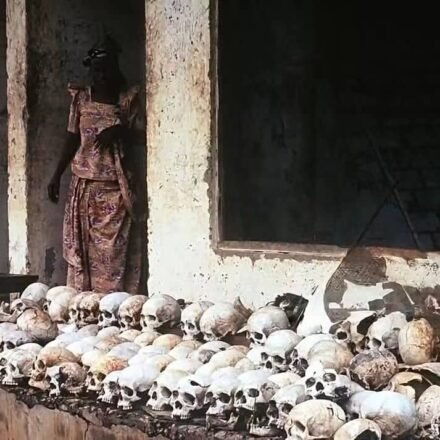
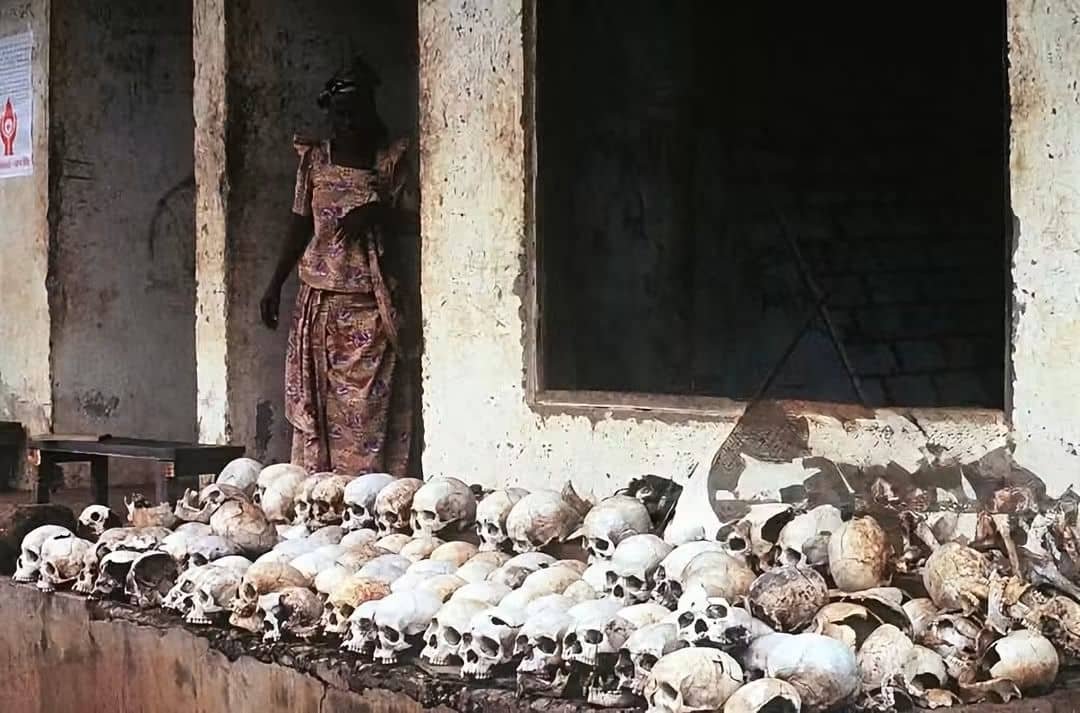
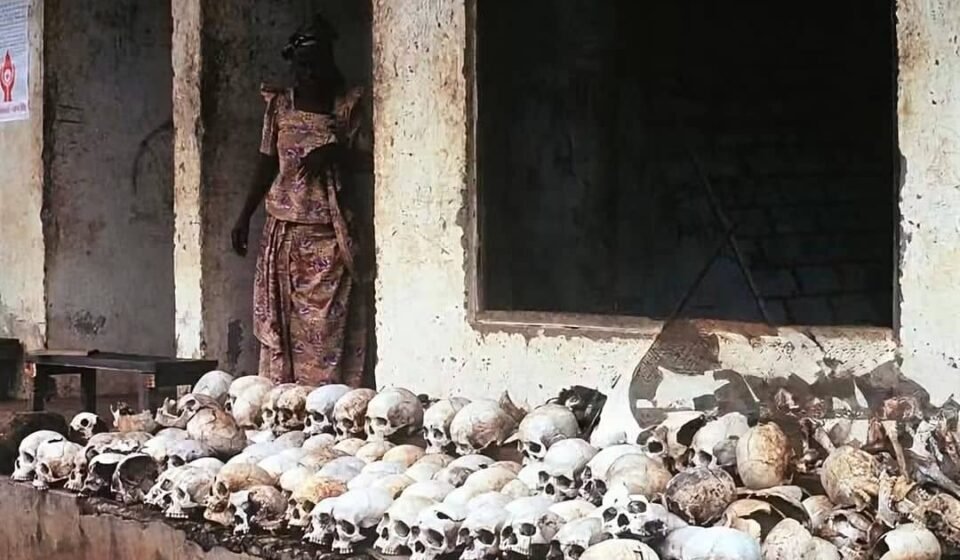
The photographs of human skulls and skeletal remains associated with Luwero are a disturbing reminder of the human cost of political and military conflict. They raise an uncomfortable question for the Ugandan state and the international human rights community: Can a country genuinely claim to have reconciled with its past when the circumstances surrounding the deaths of thousands of its citizens remain inadequately addressed?
This investigation examines the documented historical record, competing narratives, the question of responsibility and the legal avenues through which victims and their descendants can continue demanding accountability.
THE WAR THAT TURNED CIVILIANS INTO VICTIMS
Uganda’s 1980 general election, contested by opposition parties and Milton Obote’s Uganda People’s Congress, was followed by allegations of electoral fraud and political repression.
In February 1981, Yoweri Museveni’s National Resistance Movement and its military wing, the National Resistance Army, launched an armed rebellion against the government.
The Luwero Triangle, north of Kampala, became one of the principal theatres of the conflict.
The government army, the Uganda National Liberation Army (UNLA), conducted counterinsurgency operations in the area in an effort to eliminate the NRA and suppress its civilian support networks.
However, civilians were caught in the middle.
Historical investigations by international human rights organisations documented grave violations by UNLA forces, including killings of civilians, looting and destruction of homes and property.
These were not merely allegations circulating in political discussions. They formed part of a broader historical human rights record that deserves continued scrutiny.
THE NUMBER OF THE DEAD: WHAT DO THE HISTORICAL ESTIMATES ACTUALLY TELL US?
One of the most politically sensitive aspects of the Luwero tragedy is the number of people who died.
Various historical accounts have presented different estimates. Some figures are frequently repeated in political discussions without sufficient explanation of their sources, geographical scope or methodology.
Historical research has discussed estimates ranging from 50,000 to 300,000 civilian deaths in the Luwero region. Other estimates refer to deaths across Uganda during the wider period of political violence between 1979 and 1986.
It is therefore important to distinguish three different things:
1. The number of people killed in the Luwero Triangle.
2. The total number of Ugandans killed or missing during the wider period of political violence.
3. The number of Baganda specifically identified among the victims.
These are not interchangeable figures.
The frequently circulated claim that more than 500,000 Baganda died specifically during the Luwero war should not be treated as an established historical statistic without supporting demographic records, burial evidence and independent research.
But uncertainty about the precise number does not diminish the gravity of the documented atrocities.
Every unidentified skull represents a human being whose identity, family history and circumstances of death deserve investigation.
THE SKULLS OF LUWERO: MEMORIAL OR UNFINISHED INVESTIGATION?
The human remains associated with Luwero have become part of Uganda’s political and historical landscape.
Yet there is another dimension that deserves greater international attention.
What happened to the remains?
Were the victims identified? Were their families traced? Were proper forensic investigations conducted? Were the circumstances of their deaths documented? Were mass graves systematically investigated and preserved as evidence?
Historical research has examined how the Luwero skulls became part of Uganda’s political memorialisation of the conflict and how their use contributed to the post-war legitimacy of the victorious NRM government.
It has also examined tensions between official memorialisation and the perspectives of local residents and community leaders.
This raises an important human rights concern.
Human remains should not exist merely as political symbols. They are evidence of human lives lost and potentially evidence of crimes that deserve independent examination.
A proper investigation should establish the identities of victims wherever possible, document burial sites, preserve forensic evidence and give surviving families access to the truth.
THE ODER COMMISSION: UGANDA HAD AN OPPORTUNITY TO PURSUE ACCOUNTABILITY
Perhaps one of the most important and frequently overlooked aspects of this history is that Uganda itself established an official mechanism to investigate historical human rights violations.
In 1986, following the NRM’s assumption of power, the government established the Commission of Inquiry into Violations of Human Rights under Legal Notice No. 5 of 1986.
The commission, chaired by High Court Justice Arthur Oder, was mandated to investigate violations committed between 9 October 1962 and 25 January 1986.
Its mandate covered violations of human rights, breaches of the rule of law and abuses of power committed by successive governments and their agents.
The commission produced a substantial report containing findings, conclusions and recommendations. Its first part comprised approximately 720 pages, while its evidentiary records occupied another 13 volumes.
This raises a fundamental question:
What happened to the commission’s recommendations, and to the cases that could have resulted in criminal accountability?
An investigation is not the same as justice. Collecting testimonies, recording atrocities and publishing findings are important steps, but they cannot replace credible criminal investigations where evidence establishes individual responsibility.
Ugandans deserve to know which recommendations were implemented, which were abandoned and whether any suspects identified through the process were ever brought before a competent court.
The full report and supporting records should be made accessible to researchers, victims’ families and independent human rights investigators, subject to appropriate protection of witnesses and sensitive personal information.
ACCOUNTABILITY MUST NOT STOP AT THE FALL OF A GOVERNMENT
The question of responsibility must be approached through evidence, not political loyalty, ethnic identity or historical propaganda.
The Obote II government and its military establishment must be examined in relation to the documented abuses committed by UNLA forces.
However, historical accountability must not become selective.
The NRA also faced allegations of human rights violations during and after its military campaign. Subsequent human rights investigations documented allegations of extrajudicial executions, torture, unlawful detention and other abuses by NRA personnel during counterinsurgency operations in northern Uganda.
These findings concern different periods and geographical contexts and should not be confused with the specific Luwero atrocities. Nevertheless, they demonstrate why investigations into human rights violations must apply the same standards to every armed force, regardless of who eventually wins a war.
No military victory provides permanent immunity for crimes committed against civilians.
Equally, membership of an army, political organisation or ethnic community does not automatically establish criminal responsibility.
Investigators must establish who ordered, planned, facilitated or personally committed crimes, and whether commanders knew or should have known about crimes committed by subordinates and failed to take appropriate measures within their authority.
The principle of individual criminal responsibility must guide any future prosecution.
CAN THE INTERNATIONAL CRIMINAL COURT INVESTIGATE THE LUWERO ATROCITIES?
This is where the legal discussion becomes particularly important.
The International Criminal Court was established to prosecute individuals responsible for genocide, crimes against humanity and war crimes under the Rome Statute.
Uganda ratified the Rome Statute on 14 June 2002. The treaty entered into force for Uganda on 1 September 2002.
The ICC’s Uganda investigation focused on alleged crimes committed from 1 July 2002 onwards in the conflict involving the Lord’s Resistance Army and Ugandan authorities.
Consequently, the ICC cannot simply open a case against individuals for crimes committed in Luwero between 1981 and 1986 under its ordinary territorial or national jurisdiction. Its jurisdiction is not retroactive.
This distinction is essential. Calling for international justice must not mean promising a legal process that the relevant court has no jurisdiction to undertake.
However, the historical period predates the Rome Statute; it does not automatically mean that all possible criminal accountability has expired.
Uganda’s domestic courts and applicable international law must be examined to determine whether particular offences can still be prosecuted, taking account of the laws applicable when the crimes occurred, the principle of legality, limitation rules and available evidence.
International human rights bodies can also press for truth, access to records, independent investigations, protection of witnesses and effective remedies for victims.
The African Commission on Human and Peoples’ Rights is another relevant institution for examining state obligations under the African Charter.
The international community should therefore not confuse the ICC’s temporal limitations with the disappearance of every possible avenue for justice.
WHAT SHOULD HAPPEN NOW?
The Luwero tragedy requires more than annual commemorations and political speeches. It requires a structured, independent and evidence-based accountability process.
The following measures deserve serious consideration.
1. An independent historical and forensic investigation
Uganda should facilitate an independent investigation into known and suspected mass graves associated with the 1981–1986 conflict. Forensic specialists should examine available human remains, identify victims wherever scientifically possible and establish the circumstances of death.
2. Publication of the Oder Commission’s findings
The government should make the commission’s complete report, recommendations and relevant supporting records accessible to the public, subject to legitimate privacy and witness-protection restrictions.
3. Identification of individuals responsible
Investigators should establish the chain of command, identify individuals implicated by credible evidence and assess whether there are grounds for criminal prosecution under applicable domestic and international law.
4. International human rights involvement
The United Nations human rights mechanisms, the African Commission on Human and Peoples’ Rights and independent historical justice experts should be encouraged to examine the outstanding accountability questions and engage Ugandan authorities.
5. Justice and recognition for victims’ families
Families deserve access to historical records, identification processes, appropriate reparations and official recognition of their suffering.
6. A national truth and reconciliation process
Uganda needs a credible national process that examines abuses across successive governments and armed forces. It must not be an instrument for protecting the politically powerful or blaming entire ethnic communities.
THE QUESTION THAT UGANDA MUST ANSWER
Four decades have passed since the events that devastated communities across the Luwero Triangle.
Some victims were buried without proper identification. Some families never recovered the remains of their loved ones. Others continue to carry memories of displacement, violence and the destruction of their livelihoods.
The passage of time does not turn an unlawful killing into a lawful act. Nor does a change of government erase the responsibility to establish the truth.
Uganda cannot build a complete historical record by remembering only the suffering that strengthens the political narrative of the victorious side.
The victims of Luwero deserve recognition as human beings, not merely as numbers in political arguments.
Their families deserve answers. Their communities deserve dignity. Future generations deserve a truthful account of what happened.
And anyone against whom credible evidence establishes individual criminal responsibility must face the law through a fair and independent judicial process.
This is not a call for revenge. It is a call for justice.
The question is no longer simply who won the war.
It is whether Uganda has done enough to establish what happened to those who never came home, and whether the country is prepared to confront the responsibility of those who committed, ordered or enabled the atrocities.
If the evidence exists, it must be preserved. If the victims can be identified, their identities must be restored. If crimes can lawfully be prosecuted, those responsible must face justice.
A country cannot permanently bury its history beneath the bones of its forgotten citizens.
Alexander Luyima (GDipICL)
Human Rights Activist