
Before Uganda accepts the first explanation for the Afrigo legend’s death, investigators must examine every documented conflict, relationship and possible motive surrounding his final days.
By Alexander Luyima | The Hoima Post
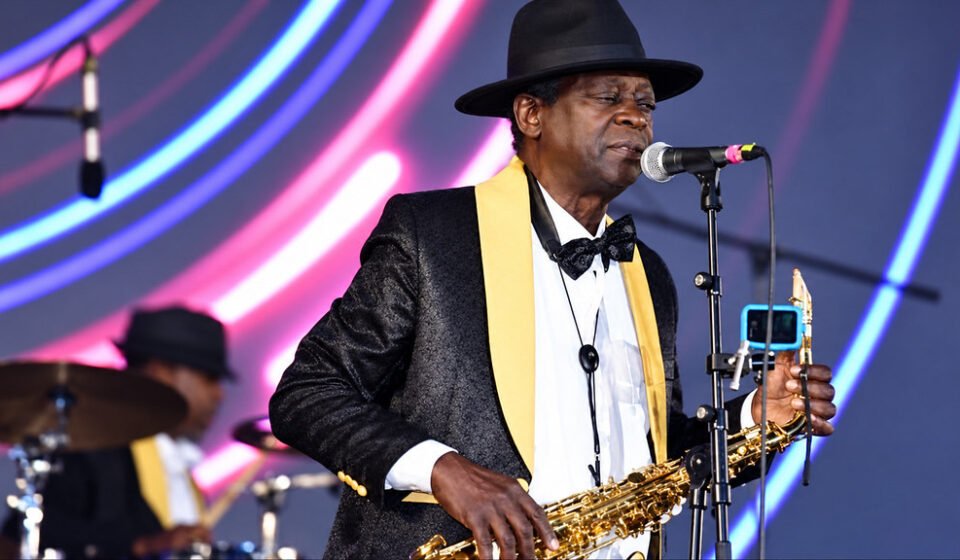
The death of Afrigo Band legend Moses Matovu has left Uganda with more questions than answers.
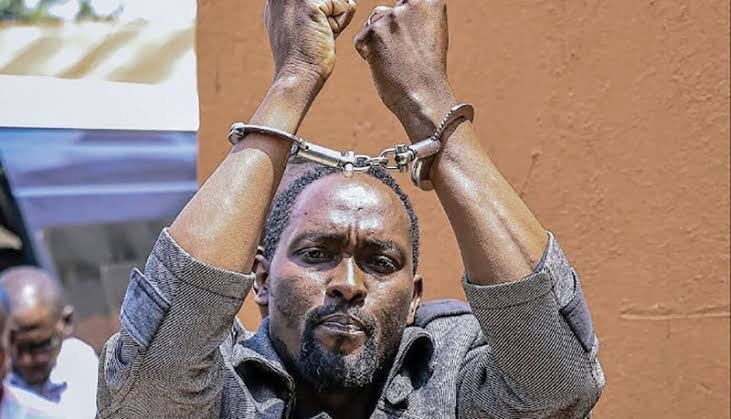
Police have arrested Vincent Nsamba, 41, as the prime suspect and presented a preliminary account involving an alleged confrontation at a residence in Kibuli in the early hours of September 24, 2026.
But an arrest is not a conviction, and a preliminary explanation is not the same as a completed investigation.
Police themselves have indicated that investigations are continuing to establish the full circumstances surrounding Matovu’s death.
That leaves one fundamental question.
Was the confrontation really the whole story?
LOOK BEYOND THE FINAL MOMENTS
Matovu was not simply a musician. He was one of the central figures in Afrigo Band’s extraordinary five decade history and remained deeply involved in the band’s affairs.
That history deserves scrutiny.
Were there disagreements within Afrigo over leadership, management, finances, bookings, succession or the future direction of the band?
What changes did Matovu want to make?
Who supported those changes and who opposed them?
Were there serious personal or professional disagreements in the period before his death?
And, most importantly, is there evidence connecting any of those disputes to what happened in Kibuli?
These are investigative questions, not accusations.
In a recorded interview reflecting on Afrigo’s journey, Matovu acknowledged that members had quarrelled over the years but described the band as having become like a family.
“Sometimes when you grow together, it becomes a family,” he said.
His own words demonstrate that Afrigo had a complex internal history. That history should now be documented rather than replaced by speculation.
THE POLITICAL QUESTION
There are also claims concerning Matovu’s political views and disagreements over some of his music.
If he was ever prevented from performing a particular song, challenged over political content or involved in disagreements with political actors, those incidents should be independently verified through recordings, witnesses, event organisers and other documentary evidence.
If he had publicly expressed dissatisfaction with government policies, those statements should also be examined in their original context.
None of this proves that politics played a role in his death.
But if investigators are serious about establishing motive, no credible line of inquiry should be ignored simply because it is uncomfortable.
CAN THE PUBLIC RELY ON THE FIRST POLICE ACCOUNT?
Uganda’s history provides reason for public scrutiny.
The country has witnessed several high profile killings in which investigations have taken years or failed to produce conclusions accepted by the wider public.
That history does not prove that the police account of Matovu’s death is false.
It does, however, explain why independent verification matters.
Forensic evidence, CCTV footage, medical findings, witness statements, telephone records where legally obtainable, fingerprints, DNA, blood evidence and the complete chain of custody of exhibits should all be examined.
The central question should not simply be who has been arrested.
It should be:
What evidence proves what happened?
THE KAYIHURA ERA AND PUBLIC TRUST
Uganda’s security history also illustrates why questions about institutional accountability cannot simply be dismissed.
During Gen Kale Kayihura’s tenure as Inspector General of Police, several major cases generated serious controversy and public concern.
Kayihura himself faced serious allegations connected to the murder of former police chief Andrew Felix Kaweesi. However, allegations must not be presented as established guilt. Subsequent scrutiny challenged important elements of evidence used against him, and charges were eventually withdrawn.
The lesson is straightforward.
Serious allegations require serious evidence.
The same standard should apply to the Matovu investigation.
AN INDEPENDENT REVIEW?
If questions surrounding Matovu’s death persist, an independent forensic review could examine the available evidence without beginning with the assumption that either the police theory or an alternative theory is correct.
Such a review could reconstruct Matovu’s final hours, examine the crime scene and postmortem findings, test forensic evidence, review CCTV and digital evidence, examine witness accounts and establish whether any previous threats or conflicts have a demonstrable connection to his death.
An independent review would not automatically mean that the Uganda Police Force is wrong.
It would mean that the evidence is important enough to be independently tested.
THE QUESTION UGANDA MUST NOT STOP ASKING
If Nsamba is responsible for Matovu’s death, the evidence should establish it.
If the reported confrontation explains everything, the forensic and witness evidence should demonstrate that.
If another explanation emerges, investigators must be prepared to follow the evidence wherever it leads.
And if Afrigo’s internal affairs, Matovu’s political disagreements or any other suspected conflict ultimately prove unrelated, that conclusion should also be accepted.
But that conclusion should come after investigation, not before it.
Moses Matovu deserves more than an arrest announcement.
His family deserves the truth.
Afrigo deserves the truth.
And Uganda deserves an investigation capable of answering the questions surrounding one of its most celebrated musicians.
Who wanted Moses Matovu silenced?
At this stage, that remains a question.
The responsibility now is to find the evidence that can answer it.