
By Ronald Kasirye | The Hoima Post
KAMPALA: What began as a dispute over Ugandan political activist and government critic Fred Kajubi Lumbuye has developed into a much broader confrontation involving Uganda’s military leadership, the Patriotic League of Uganda, the Turkish Embassy and increasingly important questions surrounding Uganda’s strategic interests in Somalia.
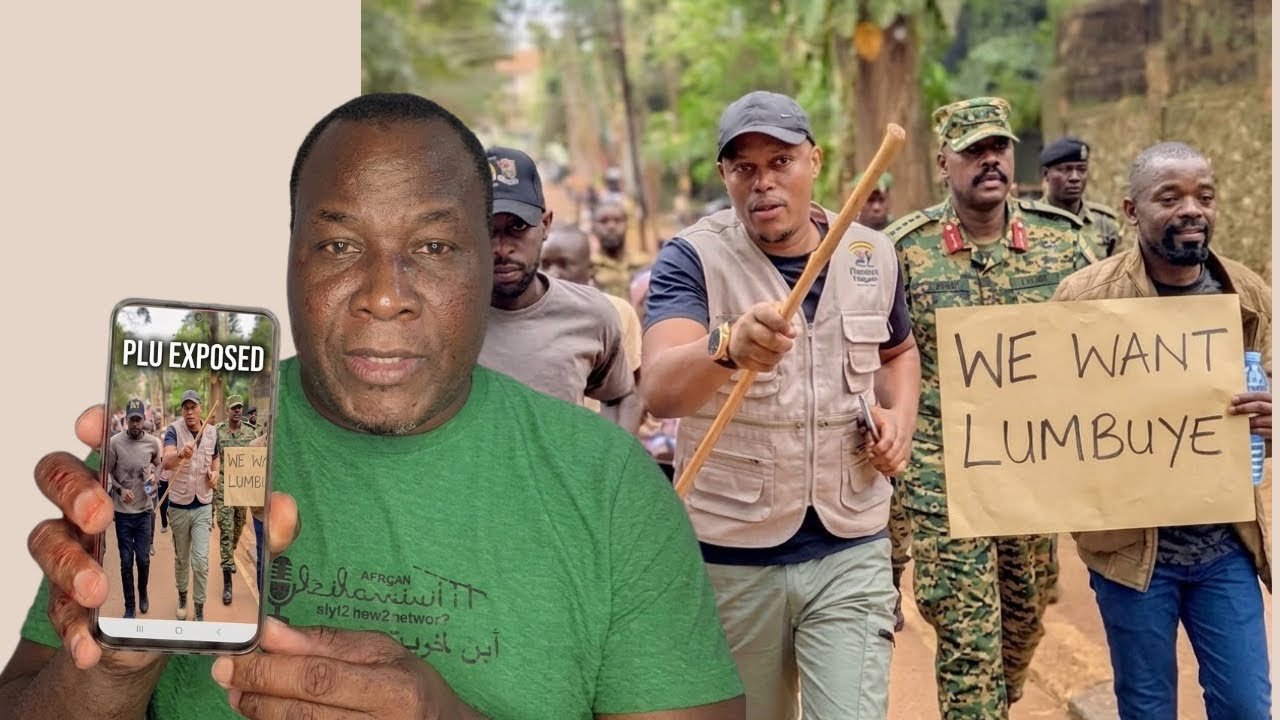
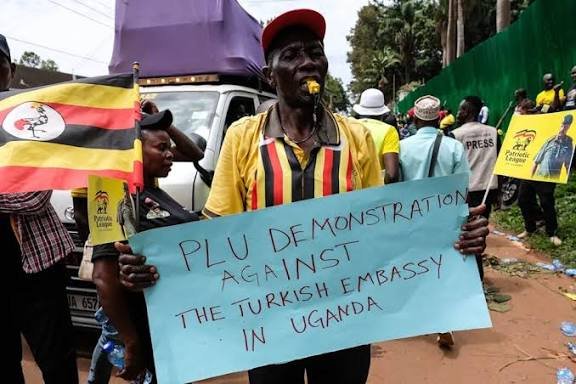
On Friday, September 18, hundreds of Patriotic League of Uganda supporters marched to the Turkish Embassy in Kampala demanding that Ankara hand Lumbuye over to Uganda to face criminal charges.
The demonstration followed a directive from PLU chairman and Uganda’s Chief of Defence Forces, Gen. Muhoozi Kainerugaba. The Turkish Embassy had announced that it would close on Friday because of the planned demonstration. Turkish officials subsequently advised the protesters to pursue the matter through diplomatic channels.
But behind the immediate Lumbuye dispute lies a much larger geopolitical question.
Why has a dispute over one Ugandan political critic become intertwined with Uganda’s relationship with Turkey and the strategic future of Somalia?
That question deserves closer examination.
LUMBUYE IS THE IMMEDIATE DISPUTE
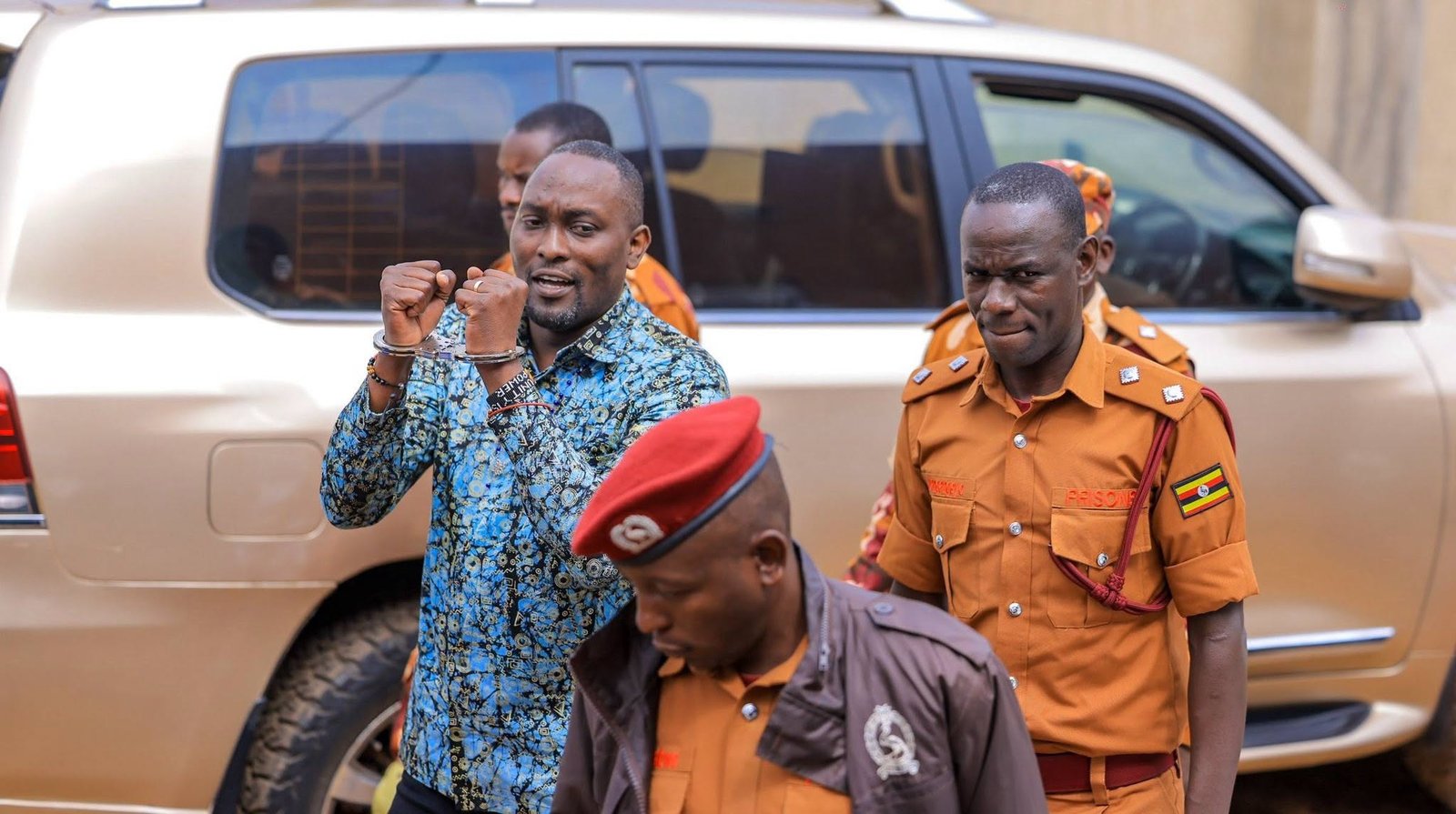
Ugandan authorities have previously accused Lumbuye of offences including spreading harmful propaganda, incitement to violence and cyber related offences.
Police said in 2021 that they had opened multiple case files involving him, while prosecutors sanctioned charges including harmful propaganda, incitement to violence and offensive communication. Lumbuye was detained in Turkey in August 2021 during an attempted removal before legal intervention prevented his immediate deportation. He subsequently remained in Turkey.
Lumbuye has continued using social media to criticise President Yoweri Museveni’s government and senior officials.
The Ugandan government and PLU therefore present the matter primarily as one concerning law, sovereignty and accountability.
Critics of the government, however, see the case through a different lens, arguing that it concerns the treatment of a political critic operating outside Uganda.
Those competing interpretations should not be confused with established facts.
The central legal question is whether Uganda’s allegations satisfy Turkish law and the applicable extradition process.
Turkey has its own judicial framework governing extradition, meaning that a foreign government’s demand does not automatically result in surrender.
The question is therefore not simply whether Kampala wants Lumbuye returned.
It is whether the legal requirements for extradition have been satisfied.
BUT WHY TURKEY?
This is where the story becomes considerably more interesting.
Uganda and Türkiye were publicly describing their bilateral relationship as strong as recently as April 2026.
Uganda’s Foreign Affairs Minister, Jeje Odongo, said after meeting Türkiye’s ambassador in Kampala that the two countries intended to strengthen economic cooperation, education, infrastructure and people to people relations.
Both sides described the bilateral relationship as strong and committed themselves to continued dialogue.
Yet months later, Uganda’s relationship with Ankara has entered an unusually public confrontation.
Gen. Muhoozi has repeatedly criticised Turkey, demanded action concerning Lumbuye and called for demonstrations against the Turkish Embassy.
Reports in September also documented his calls for Turkish nationals and interests to leave Uganda, adding another dimension to the dispute.
So what changed?
And why does Somalia repeatedly appear in the background?
UGANDA’S LONG MILITARY ROLE IN SOMALIA
Uganda is not a newcomer to Somalia.
Ugandan forces have been central to the African Union backed security presence there since 2007, participating first in AMISOM, then ATMIS and now the African Union Support and Stabilization Mission in Somalia, known as AUSSOM.
For Uganda, Somalia is not simply another foreign deployment.
It has become a major component of the country’s regional security policy.
That remains evident in 2026.
In July, Uganda hosted the Second Extraordinary Summit of countries contributing troops to AUSSOM.
The meeting brought together military, defence and political leaders to discuss the future sustainability of operations in Somalia.
The Chiefs of Defence Forces meeting was chaired by Gen. Muhoozi Kainerugaba.
Among the issues discussed was the planned conclusion of the United Nations Support Office in Somalia and the resulting financial and logistical pressures on the mission. Uganda said UN support had already been reduced by 25 percent.
That places Muhoozi directly within the strategic debate over the future of international military involvement in Somalia.
THEN TURKEY ENTERED THE EQUATION IN A BIG WAY
Turkey has developed an increasingly significant relationship with Somalia.
Ankara’s engagement includes military training, defence cooperation, economic investment and maritime interests.
The relationship has also increasingly positioned Turkey as one of Mogadishu’s important external security partners.
The development has not gone unnoticed.
A May 2026 analysis by The EastAfrican described Somalia’s security environment as increasingly bilateralised, with Ugandan and Ethiopian forces operating under direct arrangements with Mogadishu alongside expanded Turkish and United States support.
The report described Turkey and the United States as increasingly important partners as the African Union mission faces financial and operational pressures.
That does not mean Turkey has taken over Somalia.
There is no evidence establishing that claim.
What can be established is that Turkey’s strategic influence and bilateral security relationship with Somalia have grown substantially.
And that creates a new reality for countries such as Uganda, which have invested heavily in Somalia through the African Union framework.
TWO SECURITY MODELS IN ONE STRATEGIC SPACE
Uganda’s involvement in Somalia has largely operated through the African Union security architecture.
Turkey has built a much more direct bilateral relationship with the Somali government.
The two relationships are not necessarily incompatible.
But they overlap in the same strategic theatre.
Ugandan soldiers have spent years conducting operations in Somalia against Al Shabaab.
At the same time, Turkey has expanded its military, maritime and economic relationship with Mogadishu.
That raises legitimate geopolitical questions.
Who finances Somalia’s security?
Who provides military training?
Who controls strategic partnerships?
And how will Somalia’s security architecture evolve as international funding and African Union support change?
These are not merely theoretical questions.
They directly affect countries such as Uganda that have carried a substantial military burden in Somalia.
THE SOMALIA DISPUTE AND THE TURKEY CONFRONTATION
Recent reporting provides an important additional piece of the puzzle.
The Associated Press reported on September 18 that Uganda’s dispute with Turkey extends beyond Lumbuye and includes tensions over Somalia, where Ugandan peacekeepers have supported Somalia’s federal government against Al Shabaab for years.
The report quoted Ugandan analyst Angelo Izama as saying Turkey has become increasingly influential and a more attractive security partner for Somalia.
Uganda is expected to withdraw its troops from Somalia by August 2027.
That timing matters.
Uganda has spent years building its influence and military presence in Somalia.
Turkey is simultaneously deepening its bilateral role.
And Uganda’s military leadership is now openly confronting Ankara.
That does not prove that the Lumbuye dispute was caused by competition over Somalia.
But it makes the Somalia dimension impossible to dismiss.
THEN LUMBUYE ENTERS THE SAME STORY
This is where the investigation becomes particularly important.
Four facts can be established independently.
First, Uganda is demanding that Turkey hand over Fred Lumbuye.
Second, PLU has publicly mobilised against the Turkish Embassy.
Third, Uganda has a longstanding and strategically important military role in Somalia.
Fourth, Turkey has become an increasingly important security partner of Somalia.
The person connecting these developments politically is Gen. Muhoozi Kainerugaba, who is simultaneously Uganda’s CDF and chairman of PLU.
That does not establish that the Lumbuye case is a proxy battle over Somalia.
But it creates a legitimate investigative question.
Are the Lumbuye dispute and the Somalia disagreement separate disputes, or are they manifestations of a broader deterioration in Uganda Turkey relations?
The evidence currently available does not provide a definitive answer.
THE SOVEREIGNTY ARGUMENT
PLU argues that Turkey should respect Uganda’s sovereignty by returning Lumbuye.
That is a political position.
But sovereignty applies to both states.
Uganda has the right to investigate and prosecute alleged crimes under its laws.
Turkey has the right to determine under its own legal system whether an individual can be extradited.
Consequently, the diplomatic demand alone cannot determine the outcome.
The important question is whether Uganda has submitted a formal extradition request and, if so, what evidence and charges accompany that request.
That information would allow the public to distinguish between a genuine judicial process and political pressure.
THE MUHOOZI FACTOR
The role of Gen. Muhoozi makes this dispute particularly unusual.
The campaign against Turkey is not being driven exclusively through Uganda’s Foreign Affairs Ministry.
It is being publicly driven by a political organisation chaired by the country’s Chief of Defence Forces.
The September 18 demonstration followed Muhoozi’s directive, according to reports from Uganda.
PLU Secretary General Fadil Twalla told protesters that the organisation wanted Lumbuye returned to Uganda to answer criminal charges. He also warned that PLU could review Turkish interests in Uganda if the matter remained unresolved.
The Turkish Embassy, meanwhile, closed on the day of the protest and advised its citizens that operations would be suspended because of the planned demonstration.
This creates an unusual overlap between military leadership, political mobilisation and foreign policy.
That deserves public scrutiny.
A STRIKING DIPLOMATIC CONTRAST
There is another detail that cannot easily be ignored.
In April 2026, Uganda’s Foreign Affairs Ministry publicly said relations with Türkiye remained strong.
Five months later, a political organisation chaired by the country’s CDF marched on the Turkish Embassy demanding the return of a Ugandan government critic.
That is a dramatic change in diplomatic tone.
It raises a basic question.
Is Kampala speaking with one voice on Turkey?
Or are Uganda’s formal diplomatic institutions and the increasingly influential political and security establishment sending different messages?
That question deserves an answer from the Ugandan government.
WHAT WE KNOW
We know that Fred Lumbuye has lived in Turkey for years.
We know Ugandan authorities have accused him of criminal offences relating to his online activities.
We know PLU has demanded his return.
We know hundreds of PLU supporters demonstrated at the Turkish Embassy on September 18, 2026.
We know the demonstration followed a directive from Gen. Muhoozi Kainerugaba.
We know the Turkish Embassy closed because of the planned protest.
We know Uganda has maintained a major military role in Somalia for many years.
We know Uganda hosted an AUSSOM troop contributing countries summit in July 2026, chaired at the defence chiefs level by Muhoozi.
We know Turkey has become increasingly influential in Somalia’s security architecture.
We know Uganda’s relationship with Turkey was publicly described as strong by the Foreign Affairs Ministry earlier this year.
These are documented developments.
WHAT WE DO NOT KNOW
We do not have sufficient evidence to conclude that the Lumbuye dispute is a covert struggle over Somalia.
We do not have evidence establishing that Turkey is attempting to displace Uganda from Somalia.
We do not have evidence that Ankara’s relationship with Mogadishu is responsible for Uganda’s demand for Lumbuye.
Those would be serious allegations requiring serious evidence.
The responsible investigative position is therefore to identify the connections while clearly separating documented facts from interpretation.
THE QUESTIONS KAMPALA AND ANKARA SHOULD ANSWER
If this dispute is genuinely about justice and sovereignty, several questions should be answered publicly.
Has Uganda submitted a formal extradition request for Fred Lumbuye to Türkiye?
What offences are contained in that request?
What evidence has Uganda supplied?
Has a Turkish court considered the request?
What is Lumbuye’s current legal status in Türkiye?
Has he applied for asylum or another form of international protection?
What exactly is Uganda’s current financial and military arrangement concerning its Somalia deployment?
How much does Uganda spend on its Somalia operations?
What financial support does Uganda receive for its military contribution?
What role does Turkey play in Somalia’s evolving security architecture?
And perhaps the most important question is this.
Is the confrontation with Türkiye fundamentally about Fred Lumbuye, or is the Lumbuye case now one component of a much wider dispute between Kampala and Ankara?
Those questions require documents, not speculation.
THE BIGGER STORY
Fred Lumbuye has become much more than an online political critic in this dispute.
His case is now sitting at the intersection of Uganda’s domestic politics, diplomatic relations with Turkey, military leadership and the changing security architecture of Somalia.
That does not mean Lumbuye himself is responsible for the wider geopolitical tensions.
Nor does it establish that Somalia is the hidden cause of the dispute.
But the timing and overlapping interests make the wider context impossible to ignore.
Uganda has invested heavily in Somalia.
Turkey has expanded its strategic relationship with Somalia.
Uganda’s military leadership is now confronting Turkey publicly.
And at the centre of the immediate diplomatic dispute is a Ugandan political critic living in Turkey.
That combination deserves investigation.
THE BOTTOM LINE
The simplest version of the story is this.
Uganda wants Fred Lumbuye returned. Turkey has not handed him over. PLU has protested.
But the deeper story may be much more consequential.
Uganda and Turkey have enjoyed years of diplomatic and economic cooperation.
Yet their relationship is now facing an increasingly public confrontation involving Lumbuye, Turkish interests in Uganda and disagreements surrounding Somalia.
Whether these disputes are connected remains an open question.
The answer should not be manufactured through political rhetoric from Kampala or Ankara.
It should come from the documents.
Show the extradition request.
Show the charges.
Show the evidence.
Show the diplomatic correspondence.
Show the financial and military arrangements surrounding Somalia.
When freedom of political expression, national sovereignty, military power and foreign policy collide, citizens deserve transparency.
They deserve facts.
And they deserve to know whether the Lumbuye dispute is simply about one man or whether it is a symptom of a much larger realignment in Uganda’s relationship with Turkey and the Horn of Africa.
Ronald Kasirye | The Hoima Post